Skills you bring from the shop floor
Someone who has sold suits for a few years walks out with more than they tend to give themselves credit for. You can stand behind a client at the fitting room mirror and see whether the shoulder is too wide, whether the trouser break sits right and whether the sleeve hangs clean. You have talked a lot of people through cloth, and you know why a navy hopsack sells in May while the flannels wait for autumn.
You also know how to close, how to answer "I need to think about it", and how to tell someone when their suit will be ready without overpromising. Plenty of founders without retail years behind them have to learn all of that from nothing.
Your gaps are narrower: taking a complete set of body measurements for a workshop, placing a production order yourself, and setting your own prices.
Measuring and ordering for a workshop
In most stores the alterations tailor does the measuring, or you follow a short house system. Our order form asks for more: it has 47 measurement fields, and you cannot submit it until 31 of them are filled in. You take the measurements, type them into the ordering platform, pick the cloth and the construction, and confirm the order.
If your experience is retail fittings, 47 fields looks like a lot. You already know where the tape goes for chest, waist, seat, sleeve, back length and shoulder, and many of the remaining fields describe things you have been correcting by eye on finished jackets for years. The difference is that you now write them down as numbers instead of chalking or pinning them.
The platform takes you through the fields one at a time. When all you have is a client's height and weight, that is enough to start with AI-suggested sizes, which you then refine once the client is standing in front of you.
Construction is the other new decision. In the store the brand chose fused, half canvas or full canvas for you and the price tag followed from it. On your own you choose, and the choice moves your cost per suit.
The sample suit and your price list
Before you sell to anyone, order one suit in your own size and wear it to every meeting, so prospective clients can handle the cloth and look at the lapel roll from close up. That suit is your shop window now. Take your time over the fit, because people will judge the label by this suit.
Full package, meaning our cloth and our making, begins at 155 USD for a two-piece suit ex works Shanghai, and half canvas begins at 185 USD. Shipping time and cost come on top. The suit carries your own label, and that label states the country of origin.
What you charge depends on your market, but the sum itself is simple. Add up the suit price, shipping, import duty (the buyer pays it, at the buyer's own rate) and whatever you spend on travel or meeting rooms, and what is left above that total is your margin. Write those costs down per suit before you settle on a figure; a price list you can explain line by line is far easier to defend across a table than one you guessed.
Keep the first cloth range small. A plain navy, a plain charcoal and one pattern are enough for most first conversations with clients, they keep what you spend on samples down, and the rest of the cloth can wait until you know which cloths your clients ask for.
Your employment contract and old clients
Read your employment contract before you contact anyone. Some retail contracts include non-compete or non-solicitation clauses that run for a while after you leave, and you need to know what yours says. If the wording is unclear, paying a lawyer to read it costs far less than a dispute with a former employer.
If the contract leaves you free, the people you used to serve are your first market. Some of them trust your eye more than the store's name and will follow you once they hear what you are doing. Tell them you are launching your own label, that the suits are made in a workshop in Shanghai, China, that you can make them a single suit, and what the first one costs.
Be plain with them about what has changed. You still remember how they like a jacket cut and which cloth they keep coming back to, but the suit now carries your name and you set the price.
Meeting clients without a shop
You can measure a client at home, at their office or in a room you rent for the afternoon. Some founders book a hotel suite for a day and fit several appointments into it.
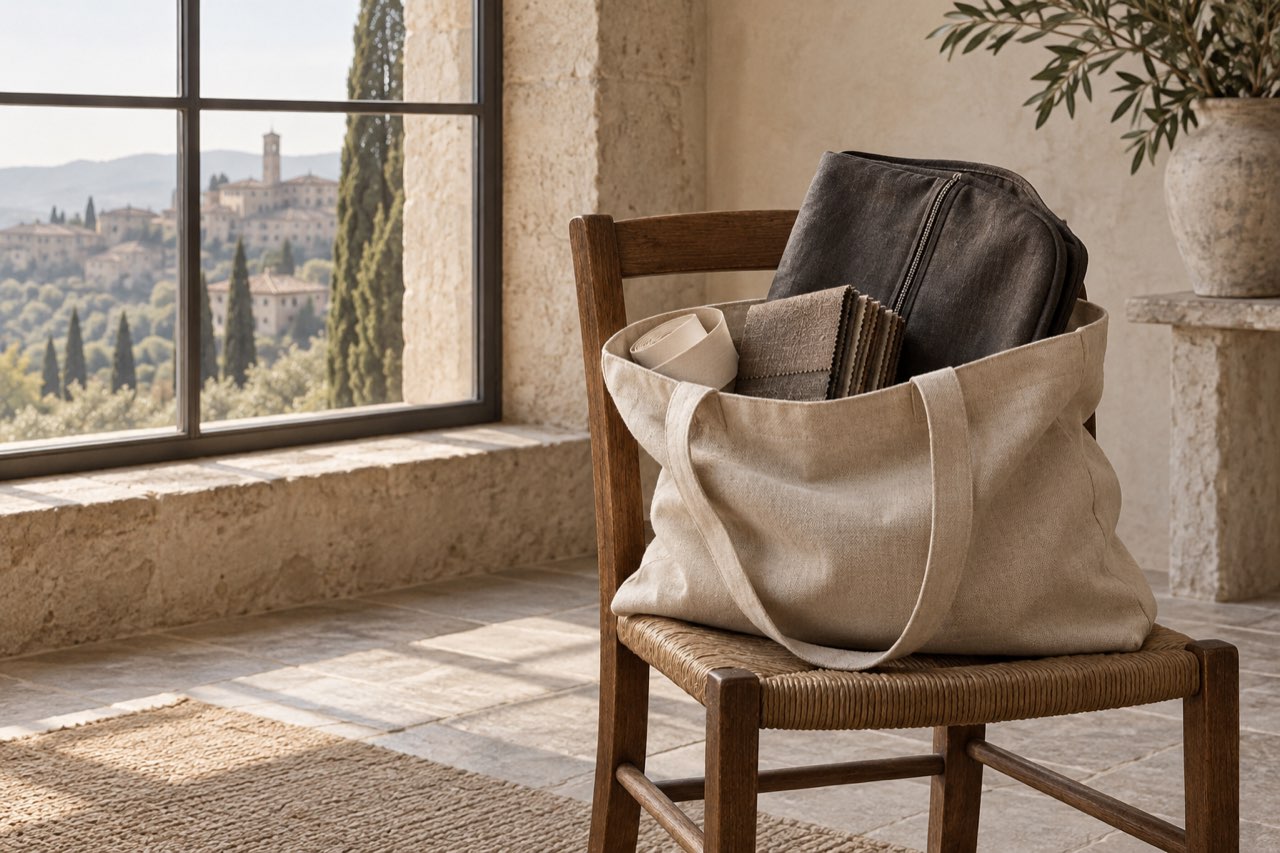
Pack a tape measure, your swatch books, the sample suit in a garment bag and some way of taking payment, and you have what the fitting room gave you, minus the rent. Many co-working spaces let you book a meeting room by the hour; look for one with a full-length mirror and good daylight.
What to do next
Order your first sample suit, wear it, and start talking to the people who already trust your judgement on fit.
You can place that first order on WhatsApp. One piece is enough to order, and the workshop needs 14 days once you confirm it. Message us on WhatsApp and describe the label you have in mind, or use the contact form.
Questions founders ask
Do I need a shop to start a made to measure label?
No. You can measure clients at their home, their office or a rented room, and order one suit at a time. Our minimum order is one piece.
Can I start while I still work in a store?
Yes, as long as your contract allows it. With a one piece minimum you only order when a client has paid, so you can take orders as they come in.
How long will my first client wait?
Count 14 days of production from the moment you confirm the order, then add the transit time to wherever the suit is going.